Photovoltaic glass turns ordinary windows, facades, and skylights into surfaces that generate electricity while still letting light through. You can cut building energy costs and add renewable generation simply by swapping conventional glazing for PV glass that integrates solar cells within or on the glass itself.
You’ll explore how the technology works, where it fits in modern buildings, and which design choices affect performance and aesthetics. Expect clear guidance on core technologies, practical applications, and market trends so you can judge whether PV glass suits your project or investment.
Core Technologies and Applications
Photovoltaic glass combines engineered glass, active photovoltaic layers, and mounting/connection systems to generate electricity while serving as a building envelope element. Key trade-offs involve transparency, efficiency, durability, and integration method.
Materials and Structure
You’ll find two primary material families: crystalline-silicon based and thin-film (amorphous silicon, CIGS, perovskite) PV layers. Crystalline-silicon laminated into low-iron glass gives higher efficiency but lower visible transparency. Thin-film coatings or embedded layers allow semitransparent designs with tunable light transmission.
Glass construction typically uses laminated assemblies: glass / encapsulant (EVA or PVB) / PV cell or thin-film layer / back glass or polymer. Edge seals, busbars, and transparent conductive oxides (TCOs) provide electrical extraction and protection. Tempered or chemically toughened glass increases impact resistance and meet building codes.
Spectral management coatings (anti-reflective, selective mirrors, or wavelength converters) improve solar capture without drastically reducing visible light. Your choice of cell type and encapsulation determines thermal behavior, long-term degradation rates, and fire/safety ratings.
Integration in Building Design
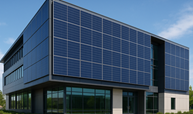
You can integrate PV glass as façades, curtain walls, skylights, canopies, or balustrades. Frameless glazing or standard curtain-wall framing both work, but you must coordinate structural loads, wiring channels, and junction boxes early in design.
Design choices balance daylighting, views, and energy yield. Use semitransparent modules for windows where visual comfort matters; use opaque or low-transmittance panels for spandrel areas or parapets to maximize generation. Consider shading patterns and orientation: south-facing vertical façades yield different daily profiles than tilted roofs.
Thermal, acoustic, and UV performance affects HVAC sizing and occupant comfort. You should verify building codes, fire ratings, and insurance implications. Plan for maintenance access, module replacement, and electrical interconnection to building energy management systems.
Commercial and Residential Uses
In commercial buildings, PV glass commonly appears in curtain walls, atria glazing, and canopies where larger surface area increases generation and offsets façade energy demand. Developers use it to achieve net-zero targets while preserving branded aesthetics.
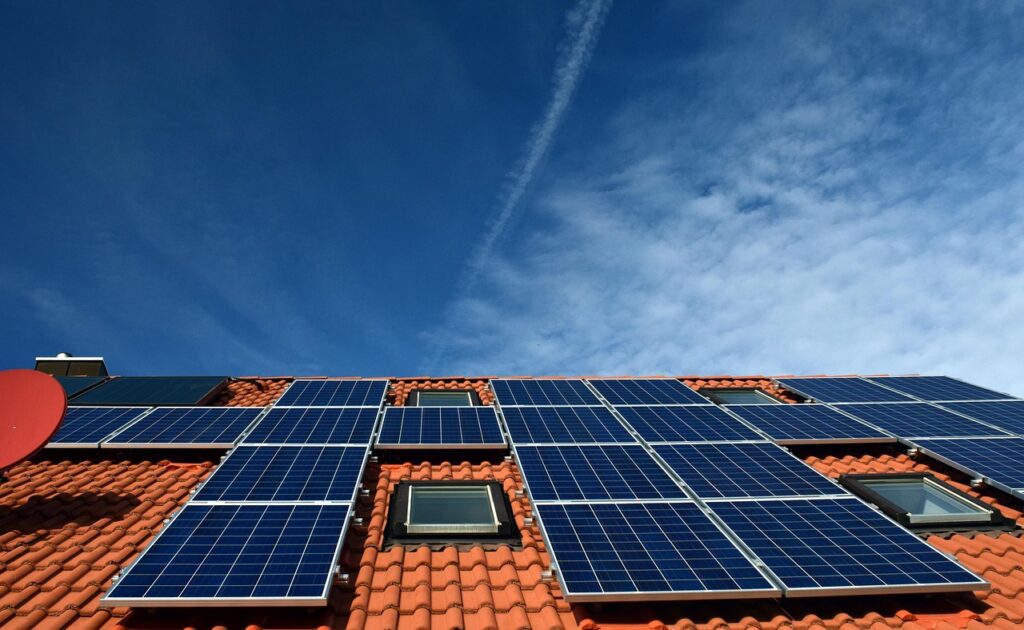
In residential settings, developers use semitransparent PV windows, balcony balustrades, and solar skylights to supply partial household loads without major roof modifications. Retrofit options include thin-film laminates applied to existing glazing or framed PV glazing replacements.
Performance expectations differ: commercial installations emphasize economy of scale and centralized inverters, while residential projects prioritize appearance, ease of installation, and grid-interactive inverters. In both markets, you should evaluate lifecycle costs, maintenance requirements, and realistic energy yield based on local irradiance and tilt/orientation.
Market Trends and Future Prospects
Photovoltaic glass is seeing rapid cost reductions, higher module efficiencies, and growing deployment in building-integrated and utility-scale projects. Demand is shifting toward larger-area, anti-reflective, and tempered glass types that improve energy yield and durability.
Recent Advancements
You can expect continued improvements in anti-reflective (AR) coatings and low-iron glass that raise light transmission by several percentage points, directly boosting cell output. Manufacturers are scaling float-glass lines optimized for solar use, enabling thinner, larger panes that reduce weight and balance-of-system costs.
Bifacial glass stacks and textured surfaces have become more common; they increase rear-side generation and improve performance under diffuse light. You’ll also see better lamination processes and tougher tempered glass that extend module lifetimes and lower degradation rates over 25+ years.
Industry Growth Drivers
You benefit from strong demand driven by expanding rooftop PV, commercial BIPV (building-integrated PV), and large utility farms in Asia Pacific and the U.S. Policy incentives and renewable procurement targets continue to push procurement volumes upward, supporting higher glass production capacity.
Cost declines in solar cells and balance-of-system components make PV glass a larger share of system value as installations scale. Supply-chain investments in larger glass furnaces and roll-to-roll AR coatings reduce per-unit costs, while manufacturers chase higher yields and fewer microcracks to protect warranty obligations.
Sustainability Impacts
You should factor the lifecycle benefits: higher-transmission glass increases lifetime energy output per square meter, lowering embodied-energy payback periods. Recycled cullet use in float glass reduces raw-material consumption and CO2 emissions at the furnace stage.
However, glass production still consumes significant energy and emits CO2. You can mitigate this by specifying low-iron recycled content, favoring suppliers using electric or oxy-fuel furnaces, and choosing coatings and adhesives with lower volatile organic compounds (VOCs). These choices improve the net carbon profile of your PV installations.