Finding a qualified EV charging installer near you doesn’t have to feel overwhelming. You can quickly locate licensed electricians and certified installers who assess your electrical system, recommend the right home charger, and complete a code-compliant installation that fits your vehicle and budget.
This post Ev Charging Installer Near Me walks you through how to choose the right professional, what to expect during the site assessment and installation, and which cost and timeline factors will affect your project. You’ll learn practical next steps to get charging at home or work with minimal hassle.
Choosing the Right EV Charging Professional
You want a qualified installer who meets safety standards, understands permit and utility requirements, and has the practical experience to match your site and vehicle needs. Prioritize verified credentials, documented project experience, and clear knowledge of local electrical codes.
Certifications and Qualifications
Look for electricians with a valid state or provincial electrical license and current general liability insurance. Confirm their license number and check it on your jurisdiction’s licensing website to ensure there are no unresolved complaints or disciplinary actions.
Seek manufacturer certifications for the specific charger brand you plan to install (for example, Tesla, ChargePoint, or JuiceBox). These certifications show the installer completed vendor training and can access firmware updates, warranty support, and recommended installation procedures.
Ask for proof of continuing education in EV charging standards such as NEC (National Electrical Code) updates, or equivalent local standards. Request copies of their certificate for EVSE-specific training and any OSHA or safety training relevant to working near panels and utility meters.
Experience With Residential and Commercial Installations
Verify the installer’s portfolio with photos and references for both single-family home and commercial projects. Residential installs typically focus on garage or driveway layout, panel capacity, and 40–80A circuits, while commercial work often involves multiple ports, load management, and networked billing systems.
Ask how many of each type they have completed in the past 12–24 months and whether they’ve handled similar service panels, meter upgrades, or demand-response integrations. For commercial sites, confirm experience with ADA compliance, parking lot trenching, conduit runs, and coordination with electricians who handle large-scale power upgrades.
Request contactable references and visit a recent site if possible. A reliable installer will provide case studies showing before/after electrical load calculations, permit approvals, and final inspection sign-offs.
Understanding Local Codes and Regulations
Confirm the installer routinely pulls permits and schedules inspections in your municipality. Permitting avoids fines and ensures your installation meets local safety and utility interconnection requirements.
Ask whether they coordinate with your utility for interconnection, rebates, or time-of-use incentives. Many utilities require pre-approval for high-capacity chargers or offer incentives that require specific meter labeling and documentation.
Ensure the installer knows relevant code sections—such as NEC 625 for EV charging in the U.S.—and applies local amendments. If you live in a region with specific requirements (stormwater trenching rules, conduit depth, or historic district limits), verify they have handled those constraints before.
Factors Influencing Cost and Installation Timeline
Expect costs and timing to hinge on your electrical panel condition, the route and distance for conduit and wiring, and whether permits or upgrades are required. Equipment choice and installer accessibility also change both price and calendar time.
Site Assessment Considerations
A site visit determines conduit length, trenching needs, and the closest breaker or subpanel. If your panel has unused capacity and the charger location is near it, installation can be a few hours and cost less.
If the route requires trenching, long conduit runs, or work through finished walls, expect higher labor and materials costs and a multi-day job.
Panel age matters: a panel upgrade or adding a dedicated circuit raises costs substantially and can add days to weeks depending on electrician availability.
Accessibility for the installer and any needed ground work (paving or landscaping repair) also affect schedule and final price.
Equipment Compatibility and Selection
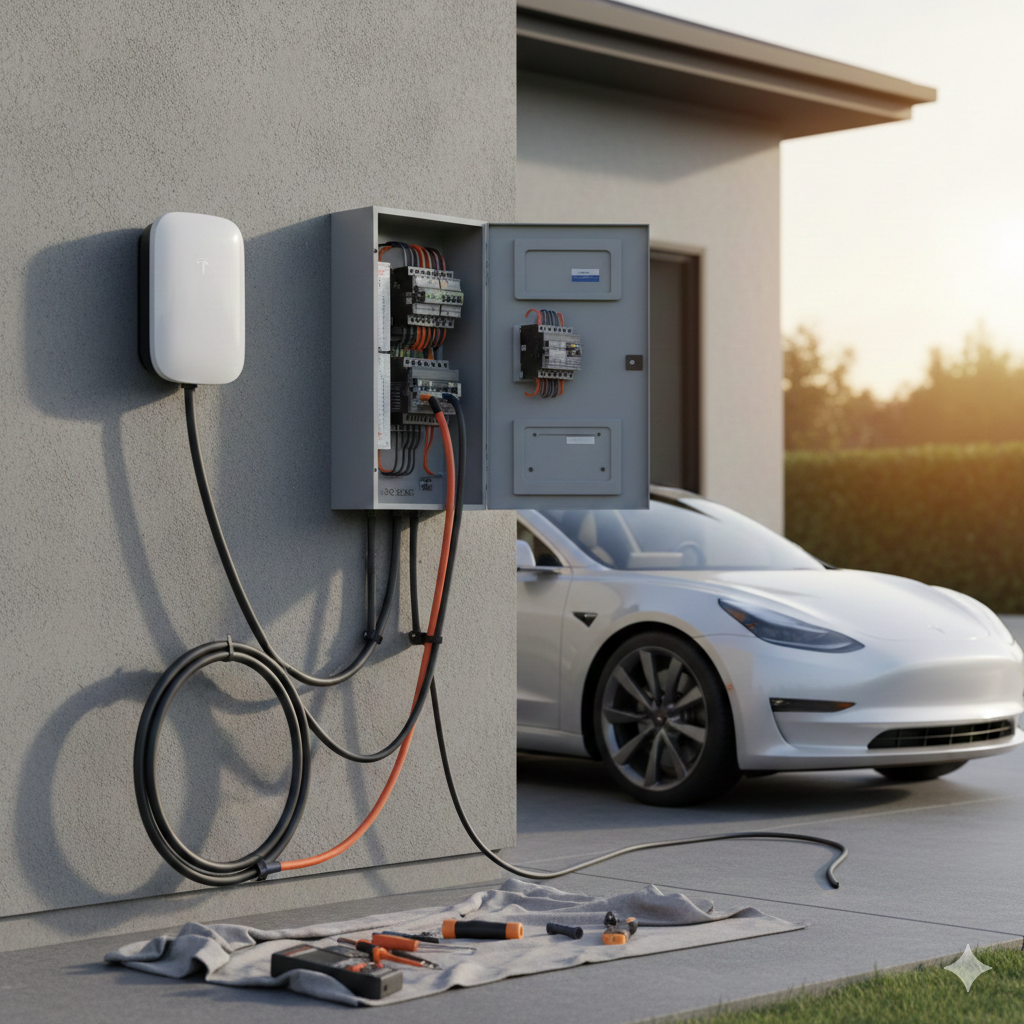
Choosing a Level 2 hardwired charger versus a plug-in unit changes hardware and labor. Level 2 units commonly cost $500–$1,200; hardwiring adds hourly electrician time.
Smart chargers with Wi‑Fi, load management, or two-way communication may require additional setup and configuration time.
Your vehicle’s onboard charger limits charge rate, so installing a 48‑amp station may not benefit a car limited to 32 amps—choose capacity to match both vehicle and future needs.
If you plan multiple chargers or circuit sharing, expect higher-cost equipment (load balancing devices) and a longer installation timeline.
Permitting and Inspection Processes
Permit requirements vary by municipality; some jurisdictions approve residential Level 2 installs quickly, others require formal plan review.
Securing a permit can take from a day to several weeks; factor local building department backlog into your timeline.
Inspections usually follow installation and must pass electrical and grounding checks. Schedule inspections early—failed inspections require rework and additional permits.
Your installer should handle permit submission and inspector coordination; confirm who is responsible to avoid unexpected delays or fees.